


How to Launch a Subscription Box Business with Your Online Store

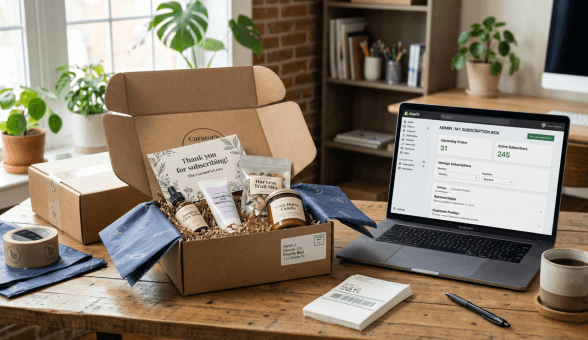
The subscription box model has quietly become one of the most profitable ways to sell products online, and the Indian market is just getting started. While the global subscription e-commerce industry has matured in markets like the US and UK, India’s subscription box ecosystem is in its early growth phase, which means the window for building a dominant brand in almost any niche is still wide open.
The appeal for customers is straightforward: convenience, discovery, and the anticipation of a curated experience delivered to their doorstep every month. The appeal for you as a seller is even more compelling: predictable recurring revenue, higher customer lifetime value, lower acquisition costs per order, and the ability to forecast demand with precision that one-time e-commerce can never match. A store selling products one order at a time starts every month at zero revenue. A subscription store starts every month with a base of committed, paying customers.
This guide walks through everything you need to launch a subscription box business in India: choosing a niche, selecting the right subscription model, pricing for profitability, managing operations at scale, reducing churn, and building the technology stack. If you are running your store on Boomimart, you will see how its e-commerce ERP, inventory management, CRM, and payment integrations provide the operational backbone a subscription business demands.
Choosing Your Subscription Box Niche
The niche you choose determines everything: your target audience, pricing, sourcing complexity, and growth ceiling. The best subscription box niches share three characteristics: the products are consumable or regularly refreshed (customers need more), the audience is passionate about the category (they enjoy discovery), and there is enough product variety to keep boxes interesting for 12+ months without repetition.
Here are the most promising subscription box niches for the Indian market in 2026:
| Subscription Box Niche | Target Audience | Avg. Monthly Price (India) | Box Contents Example | Sourcing Complexity | Growth Potential |
| Organic/Healthy Snacks | Health-conscious urban professionals, 25 to 40 | Rs 499 to Rs 1,499 | 6 to 10 items: millet cookies, roasted seeds, protein bars, dried fruit, herbal tea | Moderate (multiple artisan vendors) | Very High. Health food market growing 20%+ annually. |
| Regional/Artisan Food | Food enthusiasts, NRIs, gifting market | Rs 799 to Rs 1,999 | 5 to 8 items: state-specific pickles, sweets, spices, snacks from a single region | High (sourcing from remote artisans) | High. Nostalgia + discovery appeal. |
| Tea and Coffee | Chai/coffee lovers, home brewers | Rs 399 to Rs 999 | 3 to 5 varieties: single-origin coffee, flavoured teas, brewing accessories | Low to Moderate (direct from plantations) | High. Premium tea/coffee culture growing fast. |
| Skincare and Beauty | Women 20 to 40, beauty-conscious consumers | Rs 599 to Rs 1,499 | 4 to 6 items: natural face wash, serum, lip balm, hair mask, sheet masks | Moderate (brand partnerships or own-label) | Very High. D2C beauty is booming. |
| Baby and Toddler | New parents, 25 to 35 | Rs 999 to Rs 2,499 | 5 to 7 items: organic wipes, teething toys, baby food sachets, clothing item | High (safety compliance critical) | High. Parents love curated convenience. |
| Books and Stationery | Readers, students, journaling enthusiasts | Rs 349 to Rs 799 | 1 to 2 books, bookmarks, stationery items, reading guide | Low (publisher partnerships) | Moderate. Loyal but niche audience. |
| Pet Care | Pet owners (dogs and cats primarily) | Rs 599 to Rs 1,499 | 5 to 8 items: treats, toys, grooming supplies, accessories | Moderate (pet product sourcing) | High. Pet spending growing 25%+ in India. |
| Fitness and Wellness | Gym-goers, yoga practitioners, fitness enthusiasts | Rs 799 to Rs 1,999 | 5 to 7 items: protein samples, resistance bands, supplements, wellness journal | Moderate (brand collaborations) | Very High. Post-pandemic fitness consciousness. |
| Kids Activities and STEM | Parents of children aged 4 to 12 | Rs 499 to Rs 1,299 | 1 to 2 activity kits: science experiment, craft project, puzzle, educational game | Moderate (design + sourcing kits) | High. Edutainment demand growing. |
| Men’s Grooming | Urban men 22 to 40 | Rs 499 to Rs 1,299 | 4 to 6 items: beard oil, face wash, pomade, deodorant, shaving cream | Low to Moderate (D2C brand partnerships) | High. Men’s grooming market expanding rapidly. |
When evaluating niches, prioritize categories where you have genuine expertise or existing relationships with suppliers. A subscription box curator is essentially a trusted editor. Your subscribers are paying for your taste, your sourcing ability, and your knowledge of the category. Without authentic expertise, the curation feels generic and subscribers churn quickly.
For insights on building e-commerce businesses around specific product categories, our niche guides cover launching a fashion boutique online, selling food products online, and building a craft business.
6 Subscription Models: Which One Fits Your Business?
Not all subscriptions work the same way. Choosing the right model impacts your pricing, operations, retention, and the customer experience you deliver. Here is a detailed comparison:
| Subscription Model | How It Works | Best For | Pricing Strategy | Customer Retention | Operational Complexity |
| Curated Surprise Box | Customers receive a hand-picked selection of products that changes every month. They do not choose specific items. | Discovery-driven niches: snacks, beauty, books, artisan food | Fixed monthly price (Rs 499 to Rs 1,999). Higher perceived value through surprise element. | High initially (curiosity), drops after 3 to 4 months if novelty fades | High. New curation, sourcing, and packaging every cycle. |
| Replenishment/Essentials | Customers subscribe to receive the same products on a recurring schedule (weekly, monthly, quarterly). | Consumables: coffee, tea, pet food, cleaning supplies, baby essentials, protein powder | 10% to 20% discount vs one-time purchase price. Volume tiers for higher savings. | Very High. Habitual need keeps subscribers active for 8 to 12+ months. | Low. Same products, predictable inventory and fulfilment. |
| Build-Your-Own Box | Customers choose exactly which products go in their box from your catalog each cycle. | Stores with large catalogs: snacks, cosmetics, wellness products | Base price + per-item pricing, or fixed box size with flexible choices. | Moderate to High. Customization increases satisfaction but requires active engagement. | Moderate. Variable picking and packing, but predictable since customer chooses. |
| Tiered Subscription | Multiple subscription levels (Basic, Premium, Deluxe) with increasing product count, value, or exclusivity. | Most niches. Works especially well for beauty, fitness, and food boxes. | Rs 499 (3 items) / Rs 999 (6 items) / Rs 1,499 (10 items + exclusive). Anchoring effect encourages mid-tier. | High. Upgrade path keeps customers engaged. Downgrades prevent full churn. | Moderate to High. Three box variants to curate, pack, and manage. |
| Gift Subscription | One person buys a subscription as a gift for another. Fixed duration: 3, 6, or 12 months. | All niches. Particularly strong for food, books, baby, and wellness. | Premium pricing (10% to 20% above regular). Pre-paid fully upfront. | N/A (fixed duration). But 15% to 20% of gift recipients convert to self-subscribers. | Low to Moderate. Pre-paid simplifies cash flow. Fixed duration simplifies planning. |
| Hybrid (One-time + Subscription) | Customers can buy individual products or subscribe for recurring delivery at a discount. | Any product that customers use regularly but may want to try once first. | Full price for one-time. 10% to 25% off for subscribers. Subscribe-and-save model. | Highest. Low-risk entry (try once) with easy upgrade to subscription. | Moderate. Managing both one-time and recurring orders from the same catalog. |
The most successful subscription businesses in India often combine models. For example, a curated snack box (primary offering) with a replenishment option for favourite items subscribers want to reorder, and a gift subscription variant for festive seasons. This layered approach maximizes both new subscriber acquisition and lifetime revenue.
New one
Subscription Box Unit Economics: Pricing for Profit
The single biggest reason subscription box businesses fail is getting the unit economics wrong. The box looks great on Instagram, the first 100 subscribers sign up enthusiastically, but the founder discovers they are losing Rs 50 to Rs 200 on every box shipped. Pricing a subscription box is not simply marking up product cost. You must account for packaging, shipping, payment processing, platform costs, and customer acquisition. Here is a realistic breakdown across three popular niches:
| Cost Component | Curated Snack Box (Rs 999 price) | Beauty Box (Rs 1,299 price) | Coffee Subscription (Rs 599 price) | Notes |
| Product Cost (COGS) | Rs 300 to Rs 400 (30% to 40%) | Rs 350 to Rs 500 (27% to 38%) | Rs 180 to Rs 240 (30% to 40%) | Negotiate volume discounts as subscriber base grows. |
| Packaging (branded box, inserts, fillers) | Rs 60 to Rs 100 | Rs 80 to Rs 120 | Rs 40 to Rs 60 | Custom branded packaging adds 30% to 50% more but dramatically improves unboxing experience. |
| Shipping (avg. pan-India) | Rs 80 to Rs 120 | Rs 80 to Rs 120 | Rs 60 to Rs 80 | Negotiate monthly volume rates with courier partners. |
| Payment Gateway Fee (2% + GST) | Rs 24 | Rs 31 | Rs 14 | UPI AutoPay reduces this. See our payment optimization guide. |
| Platform Fee (Boomimart) | Rs 50 to Rs 100 (varies by plan) | Rs 50 to Rs 100 | Rs 50 to Rs 100 | Includes web store, mobile app, CRM, inventory management. |
| Customer Acquisition Cost (CAC) | Rs 200 to Rs 500 (amortized over subscriber lifetime) | Rs 300 to Rs 600 | Rs 150 to Rs 400 | CAC pays off if subscriber stays 4+ months. Referral programs reduce CAC by 30% to 50%. |
| Total Cost per Box | Rs 714 to Rs 1,244 | Rs 891 to Rs 1,471 | Rs 494 to Rs 894 | At higher subscriber counts, per-unit costs drop significantly. |
| Gross Margin per Box | Rs 285 (28.5%) to Rs -245 (loss at low volume) | Rs 408 (31%) to Rs -172 (loss at low volume) | Rs 105 (17.5%) to Rs -295 (loss at low volume) | Profitable at scale. First 100 to 200 subscribers often breakeven. |
| Break-even Subscriber Count | 150 to 300 subscribers | 100 to 250 subscribers | 200 to 400 subscribers | Assuming optimized sourcing, bulk packaging, and negotiated shipping rates. |
| Target Gross Margin at Scale (500+ subscribers) | 35% to 45% | 40% to 50% | 30% to 40% | Scale unlocks volume pricing on products, packaging, and shipping. |
The critical insight from this table is that subscription boxes are a scale business. Your first 50 to 100 subscribers will likely run at breakeven or a slight loss because your per-unit costs for products, packaging, and shipping are at their highest. Profitability kicks in around 200 to 500 subscribers when you can negotiate volume discounts across every cost component. Plan your pricing for profitability at 300+ subscribers, and be prepared to invest in growth during the early months.
For strategies on reducing your platform and operational costs as you scale, our ERP implementation cost reduction guide provides practical frameworks.
Subscription Box Operations: The Monthly Machine
Running a subscription box is fundamentally different from regular e-commerce. Instead of fulfilling orders as they come, you are executing a coordinated monthly cycle. Here is the operational workflow that keeps the machine running smoothly:
The Monthly Cycle (for a curated box shipping on the 1st of each month)
- Day 1 to 5 of previous month: Curation and sourcing. Finalize the product selection for next month’s box. Confirm quantities with suppliers based on your current subscriber count plus a 10% to 15% buffer for new signups.
- Day 6 to 12: Product receiving and quality check. Receive products from all vendors. Inspect quality, check expiry dates (critical for food), verify quantities, and flag any issues immediately. This is where batch-level inventory tracking in Boomimart becomes essential.
- Day 13 to 18: Assembly and packing. Assemble boxes: arrange products, add branded inserts (product cards, thank-you notes, next month teasers), seal, and label. For 200+ boxes, consider hiring part-time assembly help or partnering with a fulfilment centre.
- Day 19 to 22: Shipping labels and courier handoff. Generate shipping labels from Boomimart’s order management system. Schedule courier pickups. For perishable items, coordinate cold chain logistics with appropriate lead time.
- Day 23 to 28: Delivery tracking and customer communication. Send shipping confirmation with tracking links via WhatsApp and email. Monitor delivery status. Handle any transit issues (delays, damages) proactively before customers complain.
- Day 28 to 30: Feedback, billing, and next cycle prep. Collect subscriber feedback (short survey via WhatsApp or email). Process billing for next month’s cycle. Begin curation for the following month.
Inventory Management for Subscriptions
Subscription inventory is more predictable than regular e-commerce but demands tighter planning:
- Order exactly what you need plus 10% to 15% buffer. Unlike retail where you stock up and hope to sell, subscription inventory is demand-driven. You know your subscriber count. Over-ordering ties up cash and creates waste, especially with perishable products.
- Track supplier lead times religiously. If your spice supplier needs 10 days and your packaging supplier needs 7 days, your procurement must start at least 12 to 15 days before assembly day. One late supplier delays your entire cycle.
- Use Boomimart’s inventory module to track stock by batch and expiry. For food, beauty, and wellness boxes, expiry tracking is non-negotiable. Ship FIFO (first in, first out) and never include products with less than 60% shelf life remaining.
- Plan for subscriber count fluctuations. Your subscriber count changes every month: new signups, cancellations, pauses, and gift subscriptions expiring. Set a cut-off date (typically 5 to 7 days before assembly) after which new subscribers receive the next month’s box instead.
For a complete framework on managing inventory effectively across your e-commerce operations, explore our inventory management best practices guide and learn how Boomimart’s admin panel streamlines your operations.
Build Your Subscription Box Store on Boomimart. Get a Free Demo!
Payment and Billing for Subscription Boxes
Recurring billing is the heartbeat of a subscription business. Getting it wrong means failed charges, involuntary churn, and cash flow unpredictability. Here is how to set up bulletproof subscription billing in India:
- UPI AutoPay for recurring payments. UPI AutoPay (e-mandate) allows subscribers to authorize automatic monthly debits from their bank account. The customer approves a mandate once, and subsequent charges happen automatically. For amounts up to Rs 15,000, debit happens without any customer interaction. Above Rs 15,000, the customer receives a notification to approve. This is the lowest-friction recurring payment method in India.
- Card tokenization for stored card payments. For subscribers who prefer credit or debit cards, RBI-compliant tokenized cards allow you to charge their card monthly without them re-entering details. Razorpay and PayU both support token-based recurring payments.
- Prepaid plans (3, 6, 12 months) for cash flow stability. Offering prepaid subscription plans at a 15% to 30% discount locks in revenue upfront and dramatically reduces churn. A subscriber who pays for 12 months upfront will not cancel in month 3. This also helps you forecast inventory with much higher accuracy.
- Handle payment failures gracefully. 5% to 10% of recurring charges fail every month due to insufficient funds, expired cards, or bank issues. Implement a dunning sequence: retry the charge after 24 hours, send a WhatsApp reminder after 48 hours, send a final notice before pausing the subscription after 5 to 7 days. Recovering even half of failed payments significantly impacts your revenue.
For a comprehensive guide to payment optimization including UPI, gateways, and checkout strategies, our detailed article on Indian payment gateway providers and our guide on enhancing prepaid orders cover the full landscape.
Reducing Subscriber Churn: 8 Strategies That Work
Churn is the silent killer of subscription businesses. Even a 5% monthly churn rate means you lose nearly half your subscribers every year. Every subscriber you retain is worth more than a new one you acquire, because retained subscribers have zero acquisition cost and increasingly positive word-of-mouth value. Here are 8 proven churn reduction strategies:
| Churn Reduction Strategy | How It Works | Expected Impact on Churn | Implementation Effort | Best Timing |
| Personalized product rotation | Use subscriber feedback and purchase data to tailor box contents to individual preferences | Reduces churn by 15% to 25% | Moderate (requires feedback system + CRM segmentation) | From Month 3 onwards when you have preference data |
| Surprise bonus item every 3rd month | Include an unannounced extra item (worth Rs 100 to Rs 200) in every 3rd box | Reduces churn by 10% to 15% around the critical 3-month drop-off | Low (source 1 bonus item quarterly) | Month 3, 6, 9 (the typical churn points) |
| Annual plan discount (20% to 30% off) | Offer significant savings for annual commitment vs monthly billing | Locks in subscribers, reducing churn to near zero for committed period | Low (pricing configuration) | At signup and at renewal points |
| Subscriber-only exclusive products | Certain products or flavours available only inside subscription boxes, not sold separately | Reduces churn by 10% to 20% (exclusivity creates fear of missing out) | Moderate (requires exclusive sourcing agreements) | Ongoing from launch |
| Community building (WhatsApp group, Instagram) | Create a private subscriber community for reviews, polls, sneak peeks, and early access | Reduces churn by 10% to 15% (emotional attachment + social proof) | Low to Moderate (time investment in community management) | From first 50 subscribers |
| Pause instead of cancel | When a subscriber wants to cancel, offer to pause for 1 to 2 months instead | Saves 20% to 30% of cancellation attempts | Low (add pause option to subscription management) | At every cancellation attempt |
| Exit survey + win-back offer | Ask why they are cancelling. Offer a one-time discount or free month based on the reason. | Recovers 10% to 20% of cancelling subscribers | Low (automated survey + conditional discount) | At cancellation confirmation step |
| Upgrade path communication | Proactively suggest higher-tier boxes with better value when engagement is high | Increases revenue per subscriber by 15% to 25% while reducing churn | Low (email/WhatsApp communication) | After 2 to 3 positive months of engagement |
The most impactful combination is typically: annual plan discounts (locks in commitment) plus personalized rotation (keeps the experience fresh) plus the pause option (prevents emotional cancellations during tight months). Together, these three strategies can reduce monthly churn from 8% to 10% down to 3% to 5%, which transforms your business economics.
Marketing Your Subscription Box for Growth
- Unboxing content is your best marketing asset. The moment a subscriber opens your box is inherently shareable. Include a small card encouraging them to share on Instagram with a branded hashtag. Offer a discount on next month’s box for every unboxing post. User-generated unboxing content converts 4x better than branded advertising.
- Referral program with dual incentive. Give the referrer a free month and the new subscriber a discount on their first box. Referral programs are the lowest-CAC growth channel for subscription boxes because subscribers who join through referrals have 37% higher retention rates than those acquired through ads.
- Limited edition and collaboration boxes. Partner with a popular brand, influencer, or regional artisan for a special edition box. Limited availability creates urgency, generates buzz, and attracts new subscribers who might not have signed up for a regular box.
- Gift subscriptions during festive seasons. Diwali, Raksha Bandhan, Christmas, birthdays, and corporate gifting occasions are massive opportunities. Create dedicated gift subscription landing pages with 3, 6, and 12-month options. Gift subscriptions are fully prepaid (great for cash flow) and 15% to 20% of recipients convert into regular subscribers afterwards.
- Instagram and YouTube creator partnerships. Send your box to 20 to 30 micro-influencers (5K to 50K followers) in your niche. Their authentic unboxing reviews reach highly targeted audiences at a fraction of the cost of paid advertising. Track which creators drive actual signups with unique discount codes.
- Email and WhatsApp nurture for leads. Not everyone subscribes on their first visit. Capture emails and WhatsApp numbers with a lead magnet (free sample, downloadable guide, quiz) and nurture them with content, testimonials, and time-limited offers over 2 to 4 weeks.
For more e-commerce marketing strategies, our guides on e-commerce traffic management and homepage optimization for e-commerce provide broader frameworks you can adapt for subscription marketing.
Designing the Unboxing Experience
The unboxing moment is the emotional peak of the subscription experience. It is the payoff for everything: the anticipation, the payment, the wait. A thoughtfully designed unboxing experience turns subscribers into brand advocates. Here is what separates forgettable boxes from Instagram-worthy ones:
- Custom branded box or mailer. Your outer packaging is the first physical touchpoint. A plain brown box says ‘delivery.’ A branded box with your logo, colours, and a tagline says ‘experience.’ Custom printed mailer boxes cost Rs 30 to Rs 80 per unit at quantities of 200+ and are worth every rupee.
- Tissue paper or crinkle-cut paper filler. Products nestled in coloured tissue paper or kraft crinkle paper look curated and premium. They also protect products during transit. Cost: Rs 5 to Rs 15 per box.
- Product description card. A printed card explaining each product: what it is, why you chose it, how to use it, and the story behind the maker or brand. This transforms products from random items into a curated narrative. It is the difference between receiving groceries and receiving a gift.
- Personal touch. A handwritten thank-you note (feasible up to 200 subscribers) or a printed note with the subscriber’s name adds warmth. At scale, a printed card signed by the founder maintains the personal feel.
- Next month teaser. Include a small hint or sneak peek of next month’s theme. This builds anticipation and gives subscribers something to look forward to, directly reducing the likelihood of cancellation before the next cycle.
- Social sharing prompt. A small card or sticker saying ‘Share your unboxing #YourBrandBox’ with your Instagram handle. Make it easy and natural for subscribers to post. This single insert can generate 30% to 50% of your organic marketing content.
Subscription Box Mistakes That Kill Businesses
- Underpricing to attract subscribers. A Rs 299 box that costs Rs 350 to fulfil does not become profitable at scale. It becomes a bigger loss. Price for profitability at your target scale from day one, even if it means slower initial growth.
- Curating for yourself instead of your subscribers. Your personal taste is a starting point, but subscriber feedback should drive curation decisions. Implement feedback loops (surveys, ratings, WhatsApp polls) and actually use the data.
- Repeating products too soon. Sending the same item within 3 to 4 months feels lazy and breaks the discovery promise. Maintain a product rotation database and track what each subscriber has received.
- Ignoring shipping damage rates. If 5% of your boxes arrive damaged, you have a packaging problem, not a courier problem. Invest in protective packaging and test by shipping sample boxes to yourself in different cities during summer and monsoon.
- No cancellation recovery process. Letting subscribers cancel with a single click and no attempt to understand why or offer alternatives is leaving money on the table. The pause option alone saves 20% to 30% of would-be cancellations.
- Starting with too many SKUs. A box with 12 different items from 12 different suppliers means 12 potential supply chain failures every month. Start with 5 to 7 items and scale variety as your operations mature.
- Not building a store alongside the subscription. Subscribers who love a product from their box want to buy it individually. A standalone subscription without a complementary online store where subscribers can reorder favourites leaves significant revenue on the table. Boomimart’s platform handles both subscription management and individual product sales from a single catalog.
Your 90-Day Subscription Box Launch Plan
- Days 1 to 15: Research and planning. Validate your niche with a survey or social media poll. Identify 8 to 12 potential products for your first 2 boxes. Contact suppliers for samples and pricing. Define your subscription model and pricing tiers.
- Days 16 to 30: Branding and store setup. Design your brand identity (logo, colours, packaging design). Set up your Boomimart store with subscription product listings. Configure payment gateways for one-time and recurring billing. Order custom packaging (allow 2 to 3 weeks for production).
- Days 31 to 45: Pre-launch and soft launch. Build a landing page with a waitlist. Share on social media, WhatsApp, and within your personal network. Offer early-bird pricing (15% to 20% off) for the first 50 to 100 subscribers. Send sample boxes to 10 to 15 micro-influencers for unboxing content.
- Days 46 to 60: First box fulfillment. Receive products, assemble boxes, ship your first batch. Monitor delivery closely. Collect detailed feedback from every subscriber. Document operational learnings.
- Days 61 to 75: Optimize and second box. Apply first-box feedback to improve curation, packaging, and operations. Launch referral program. Begin paid advertising on Instagram targeting your niche audience. Prepare and ship your second box.
- Days 76 to 90: Scale and automate. Evaluate subscriber growth, churn rate, and unit economics. Implement automated billing (UPI AutoPay). Set up email and WhatsApp automation for onboarding, shipping notifications, and feedback collection. Plan your content calendar for the next 3 months.
A subscription box business is one of the most rewarding e-commerce models because every month you start with a foundation of committed, paying customers. The compounding effect of recurring revenue, combined with decreasing per-unit costs at scale, creates a business with genuine long-term value. With Boomimart’s e-commerce ERP managing your web store, mobile app, inventory, CRM, and payments, you have the complete operational infrastructure to focus on what matters most: curating an experience your subscribers cannot wait to open every month.
Request a free demo and see how Boomimart can power your subscription box business from day one.

